
Fractional Trends in Spain
Research on the latest growth trends for fractional holiday homes in Spain
Sarah Bancroft
11/13/20254 min read


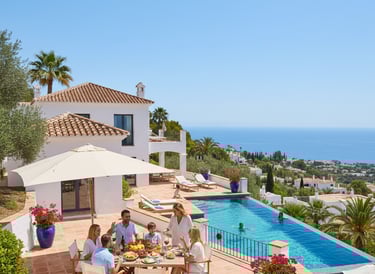
Fractional Holiday Home Sales are Growing in Spain
For decades, the dream of owning a villa on the Costa del Sol or a tranquil apartment in Mallorca has been the ultimate goal for many British buyers. The allure of a freehold property in the Spanish sun - a place entirely your own - is powerful. But what if we told you that the traditional path to ownership is becoming increasingly fraught, and a smarter, more sustainable, and financially justifiable model is emerging to take its place?
The Spanish second-home market is undergoing a structural evolution. As government interventions and a changing economy make outright ownership less appealing, a sophisticated, luxury-focused model known as fractional ownership or co-ownership has moved from the side-lines to the mainstream, offering a credible and positive alternative for the modern buyer.
The Spanish property market has shown remarkable resilience and price acceleration in regions like Málaga (Costa del Sol) and Alicante (Costa Blanca), with foreign demand remaining robust. In 2024, the House Price Index saw growth rates of up to 11.3% year-on-year.
However, this success has created an unbearable situation for Spanish residents, leading to political pushback that directly targets the foreign buyer looking to rent out their property.
Holiday Rental Restrictions: Cities such as Barcelona and Málaga have implemented freezes or outright bans on new short-term holiday licences (VUTs). Further complicating matters, a 2025 amendment to the Ley de Propiedad Horizontal now requires a super-majority (three-fifths) approval from a building's community of owners to permit new tourist rentals, drastically increasing the risk for the investor.
Anti-Speculation Tax Proposals: The government has even proposed increasing taxes, potentially imposing a 100% surcharge on the Property Transfer Tax, or banning purchases by non-EU, non-residents (which affects UK and US buyers) who are primarily buying for speculation.
For buyers post-Brexit, new regulations and punitive taxes have turned the once-straightforward freehold path into a political and legislative minefield. This is where the fractional model steps in, offering a crucial legislative 'safe haven'.

The Turbulence: Why the Traditional Dream is Fading
Fractional ownership satisfies buyer demand without the negative social impact of mass short-term rentals. It's a structured, legal model that aligns perfectly with the political objective of protecting residential stock.
Financial Justification: Paying for What You Use
Research shows that the average holiday home is used for approximately 30-60 days a year. With traditional freehold ownership, you carry the 100% financial burden of the home - the full purchase price, maintenance, and running costs - for an asset you might only use for six weeks. The fractional model, by contrast, provides the most financially sensible path to owning a luxury second home by matching your investment to your actual usage time.
Reduced Cost, Greater Access: You can own a share (typically an eighth) of a high-end luxury property for a fraction of the price. This allows buyers to access significantly better homes than their full-ownership budget would allow.
Hassle-Free Lifestyle: The purchase includes full management service (cleaning, maintenance, scheduling, and repairs), eliminating the pain points of sole property ownership. Owners only worry about what they are going to eat and drink during their stay.
True Equity, Not a Timeshare: This is perhaps the most critical distinction. Co-ownership is a sophisticated model where you gain true equity ownership, often via a property-specific Limited Liability Company (LLC), which is an appreciating asset. This is fundamentally different from a timeshare, which typically involves only a 'right-to-use' and is a depreciating asset. Your deeded share is a tangible asset that can be sold, traded, or inherited.
Fractional: The Smart, Sustainable Solution
Market Credibility and Evidenced Growth
This is not an unproven trend; the Spanish fractional market is in a rapid growth phase. Major international and local players are validating the sector with significant investment and expansion:
Significant Funding: Spanish PropTech company Vivla has secured over €35 million in capital (equity and debt) and by 2025, is expected to manage a portfolio of 60 properties with over €80 million in assets.
International Validation: US market leader Pacaso has successfully expanded into prime Spanish markets like Mallorca and the Costa del Sol, reporting strong global transaction growth and validating the high-value application of the model in Europe.
Confirmed Forecasts: Economic forecasts explicitly expect the number of properties sold in Spain through fractional ownership to rise by 101% by 2025, confirming its status as a robust emerging sector.
Leading companies like Vivla, Pacaso, and MYNE are focusing on the luxury segment, with typical price points (per fraction) ranging from around €100,000 to €800,000, targeting locations such as the Balearic Islands and the Costa del Sol.
The Next Generation of Ownership
Fractional ownership aligns perfectly with modern demographic shifts. It appeals to younger, tech-savvy generations who prioritise shared economies, flexibility, and convenience over the traditional burden of property maintenance.
These companies employ sophisticated digital strategies to clearly communicate the benefits, often using messaging like, "Own Your Dream Holiday Home for a Fraction of the Cost". The focus is on showcasing an aspirational, luxury lifestyle without the labour—allowing you to arrive, relax, and leave the property in the care of a professional management team.
The Verdict: A Structural Evolution
The turmoil, taxes, and restrictions impacting the conventional freehold market have created a powerful tailwind for the fractional model. It offers a practical and legally sound pathway for foreign buyers, delivering the luxury, lifestyle, and equity of a second home without the 100% financial and managerial burden.
Fractional ownership is not just a passing trend, but a structural evolution of the Spanish second-home market. If you are researching a holiday home purchase, co-ownership is not only a credible option - it is increasingly the smart one.
FRACTIONAL LOGIC
FRACTIONAL PLAYERS
© 2026. All rights reserved.
Explore fractional ownership in holiday homes across Europe, but also luxury assets and services today. We share news on the industry - developments, key players, legislation and the benefits of owning a piece instead of the whole